We have a few overseas followers who follow our adventures, so we are including details of roads & locations as we know they follow us on Google Earth.
Thankyou to all of you who read this blog and left your comments here or on Facebook, it is appreciated.
After Bordertown, we travelled through Keith, Coonalpyn, Tailem Bend and Murray Bridge.
At Murray Bridge we headed north, caught the ferry at Mannum, onto Mount Pleasant, Williamstown, Gawler and Burra. We overnighted at the Burra Showgrounds. The next day we travelled on to, Petersborough, Orroroo and Hawker. The town of Hawker is the gateway to the Flinders Ranges and it is also where Cheryl spent time in the area medical centre when she went into AF at Arkaroola.
Still heading north we travelled onto Parachilna Gorge where we camped two nights. It was here we caught up with my brother, Michael, and Erica. We shall be travelling together for the next few weeks as my mum worries about him (lol).
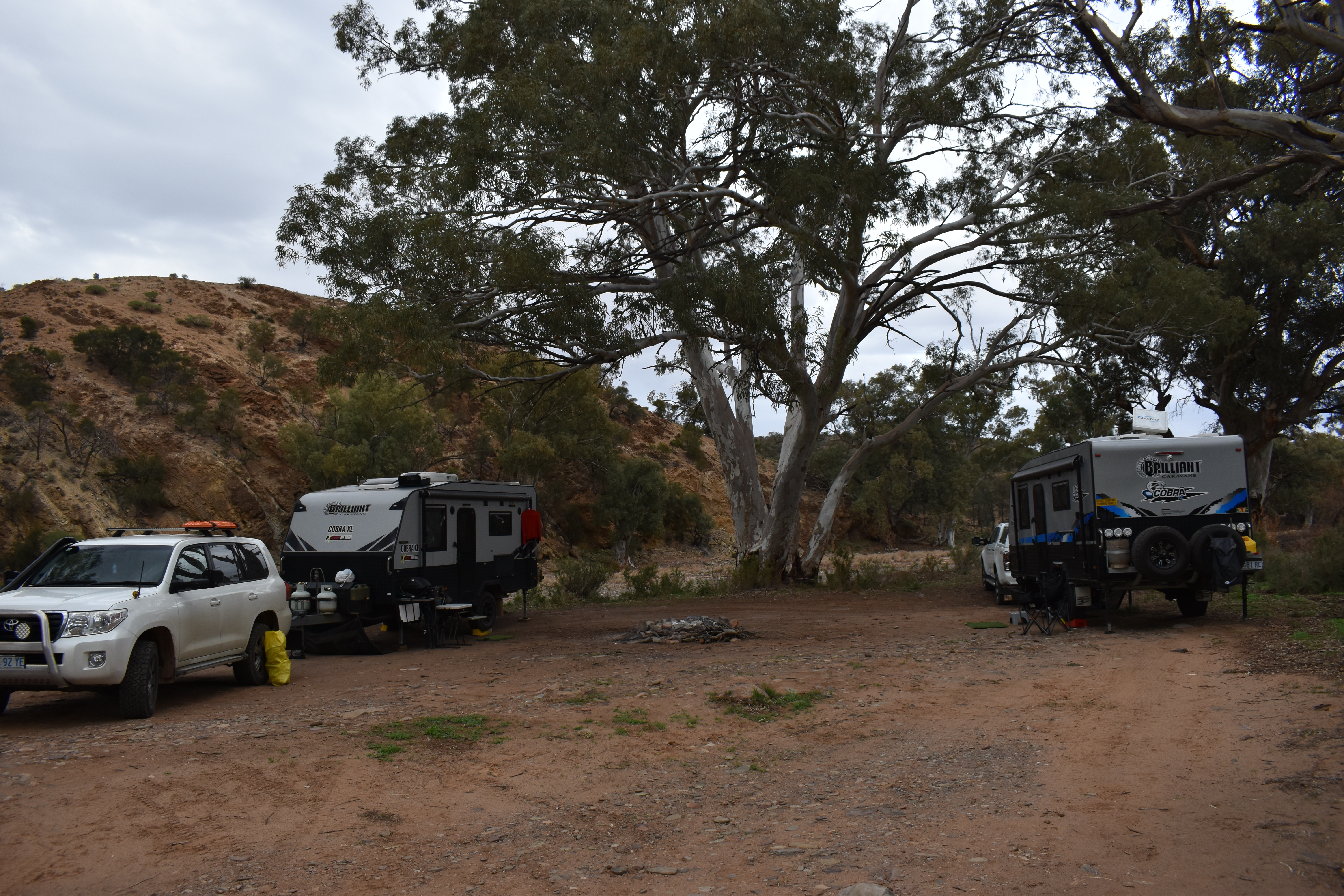
Up to now, astute readers of our blog would have discerned that we have previously travelled this particular route and visited all of the towns I have mentioned and it is for this reason we have not posted photographs.
After Parachilna we are now travelling north into country we had never been to before.
Next up was the old mining town of Leigh Creek.
The area was named Leigh’s Creek after its first settler, Harry Leigh, in 1856. Coal was discovered and small quantities mined from 1888 from an underground mine, however, the coal was not mined in a significant commercial manner until 1943.
Our next town was Lyndhurst.
The town is at the southern end of the Strzelecki Track whose northern end is at Innamincka which we hope to visit later. It was once a station on the original train route north known as the Great Northern Railway that was planned to reach to Darwin but only ever made it to Alice Springs. This railway line became known as the Ghan and the last train ran along it in 1980. The route was always subject to the weather and wash outs, and a more permanent route has been constructed about 200 kilometres to the west, and subsequently extended to Darwin.]
Lyndhurst was gazetted as a town in 1896, and initially served as a freight centre for the railways that were connected in 1882.
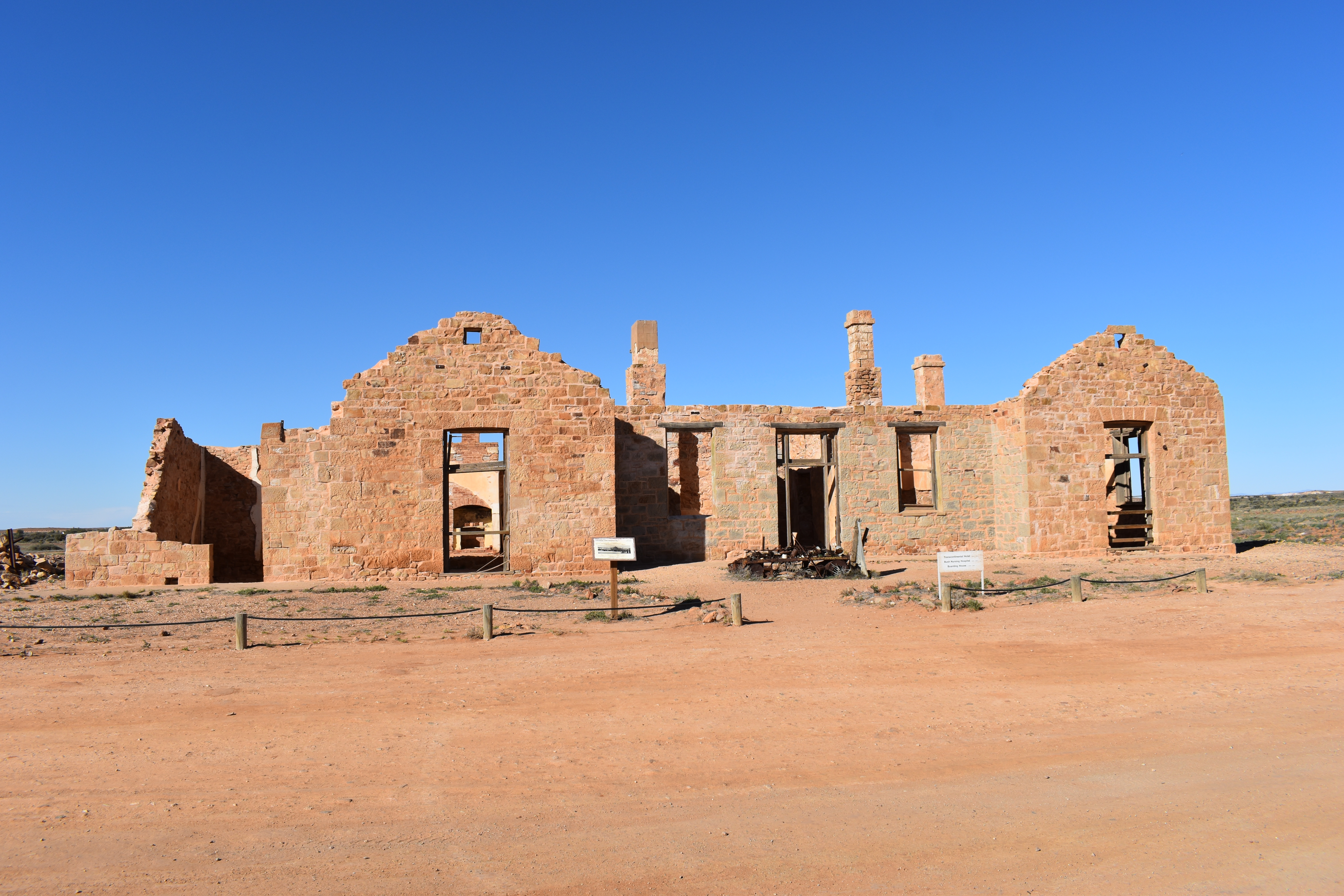
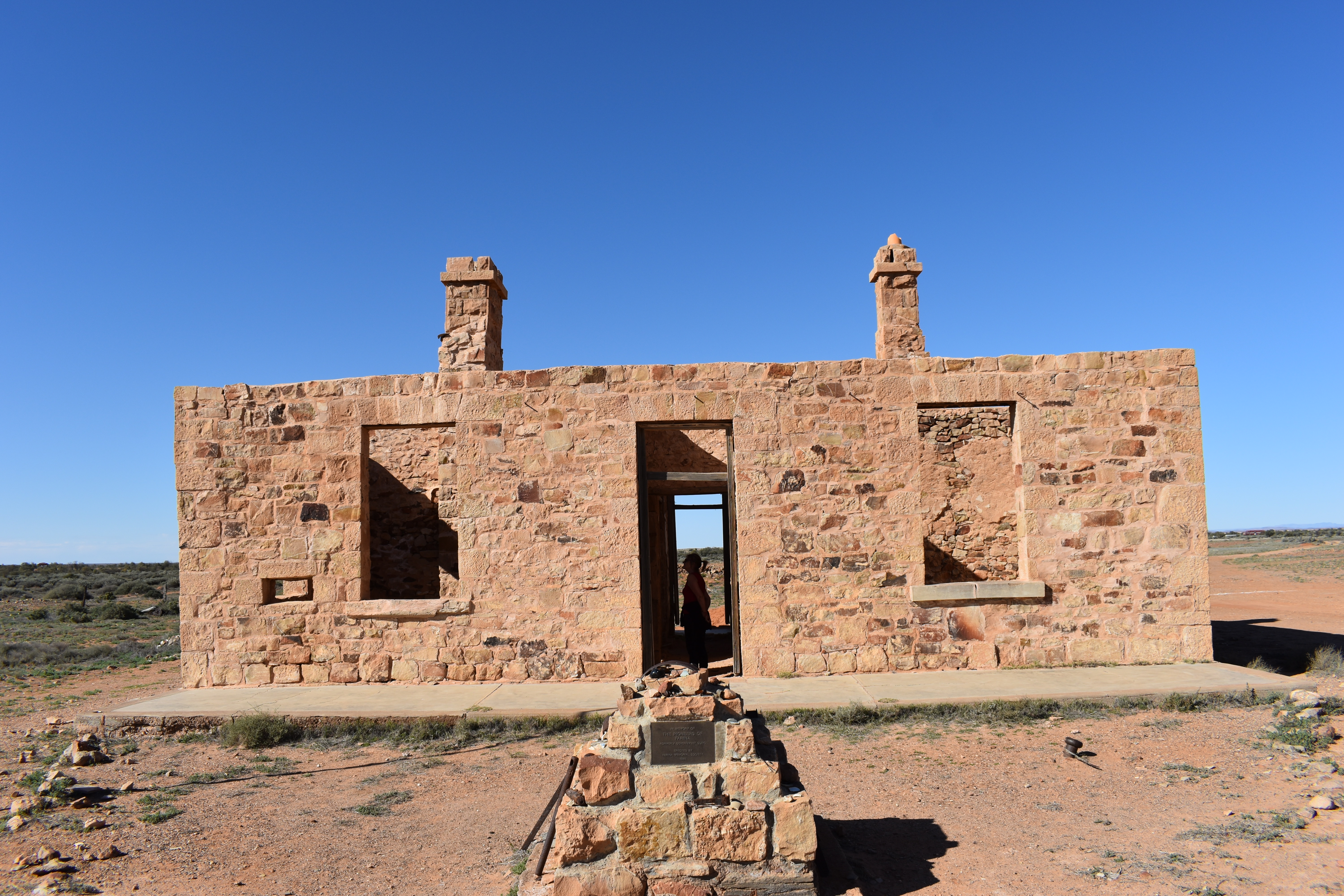
Farina sits within the arid Like Eyre basin 26 kilometres north of Lyndhurst and 55 kilometres south of Marree where the Oodnadatta Track and the Birdsville Track commence.
Farina was settled in 1878 by optimistic farmers hoping that rain follows the plough, the town became a railhead in 1882 and the railway was extended to Marree in 1884. During the wet years of the 1880s, plans were laid out for a town with 432 quarter-acre blocks. It was believed that the area would be good for growing wheat and barley, but normal rainfall proved to be nowhere near enough for that. Several silver and copper mines were opened in the surrounding area.
Farina grew to reach a peak population of about 600 in the late 19th century. In its heyday, the town had two hotels, an underground bakery, a bank, two breweries, a general store, an Anglican church, five blacksmiths, a school and a brothel. In 1909, a 1,143-kilogram iron meteorite was discovered north-east of the town.
Today, little remains of the township, except for stone ruins, a seasonally operating underground bakery, and the elevated water tank of the former railway. The underground bakery is being restored by volounteers
Marree is a small town located 589 kilometres north of Adelaide at the junction of the Oodnadatta Track and the Birdsville Track some 49 metres above sea level. Marree is an important service centre for the large sheep and cattle stations in northeast South Australia as well as a stopover destination for tourists traveling along the Birdsville or Oodnadatta Tracks.
The major areas of employment are mining, agriculture and accommodation services.
The town was home to Australia’s first mosque which was made of mud brick and built by the Afghan cameleers employed at Marree’s inception. At the turn of the 20th century the town was divided in two, with Europeans on one side and Afghans and Aboriginals on the other.
The town became a major railhead for the cattle industry. The railway was extended north from the town in stages, reaching Alice Springs in 1929. This passenger train route became known as the Ghan.
Marree was also the home of Tom Kruse a legend of the outback. He was one of the men who drove the mail trucks from Marree to Birdsville in Queensland a distance of some 700 kilometres. This route crosses some of the most challenging sandy and stony desert country in Australia, and it was a remarkable feat for fully loaded trucks to make the run at all. A collection of hundreds of photographs, documents and memorabilia from Kruse’s Birdsville mail run are on display at the Marree Hotel.
Marree is also the gateway to Lake Eyre.
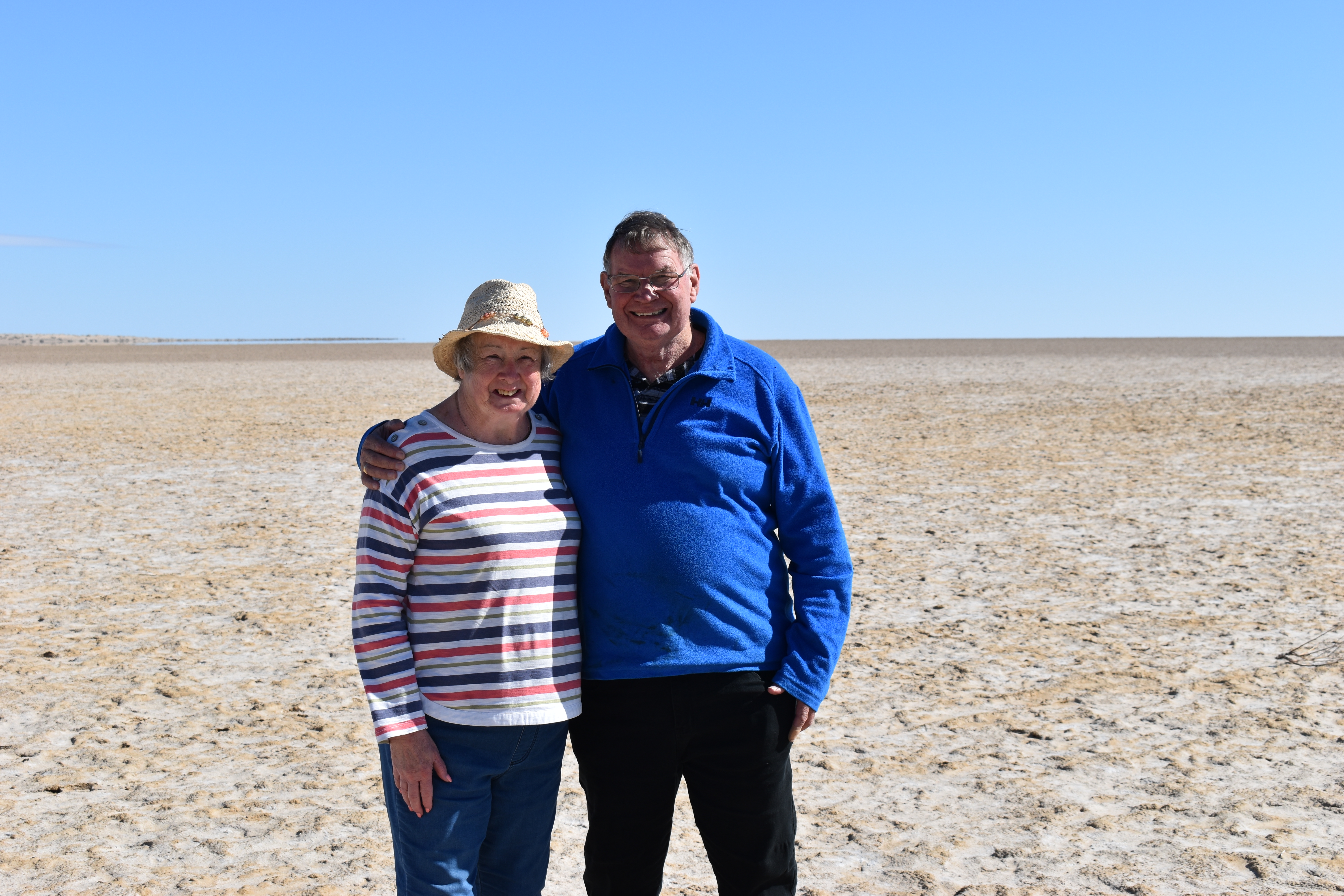
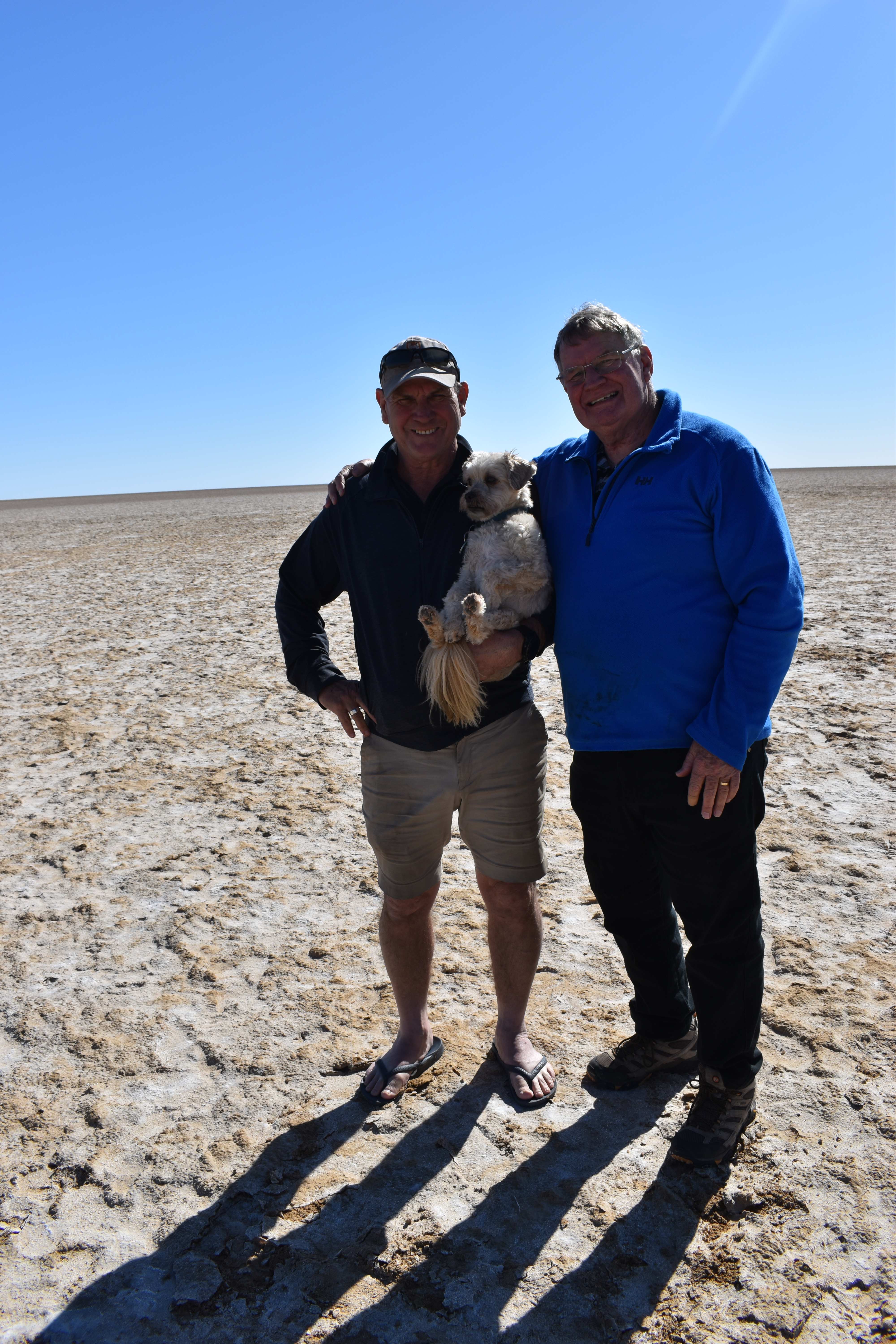
Lake Eyre lies approximately 16 metres below sea level, and usually contains only salt. In flood years, it fills and, for a short time, undergoes a period of rapid growth and fertility: long-dormant marine creatures multiply and large flocks of waterfowl arrive to feed and raise their young before the waters evaporate once more. The annual mean runoff in the Lake Eyre Basin is lowest of any of the world’s major drainage basins.
None of the creeks and rivers in the Lake Eyre Basin are permanent: they flow only after heavy rain – a rare to very rare event in the arid interior of Australia. Average annual rainfall in the area surrounding Lake Eyre is 125 millimetres, and the evaporation rate is 3.5 metres. Annualised average figures are misleading: since 1885 annual rainfall over the 1,100,000 square kilometres of the Lake Eyre Basin has ranged from about 45 millimetres in 1928 to over 760 millimetres in 1974. Most of the water reaching Lake Eyre comes from the river systems of semi-arid inland Queensland, roughly 1,000 kilometres to the north.
To provide a sense of scale, the Lake Eyre Basin is about the size of France, Germany and Italy combined.
Next stop Birdsville or is it?
 Chezza & Stephen's Blog
Great reading. Will you be in Birdsville for the races.
zandra
LikeLiked by 1 person
Hi Zandra, we are not doing the races.
LikeLike